
He left his life in New York behind after 9/11 to start again in Argentina

By Tamara Hardingham-Gill, CNN
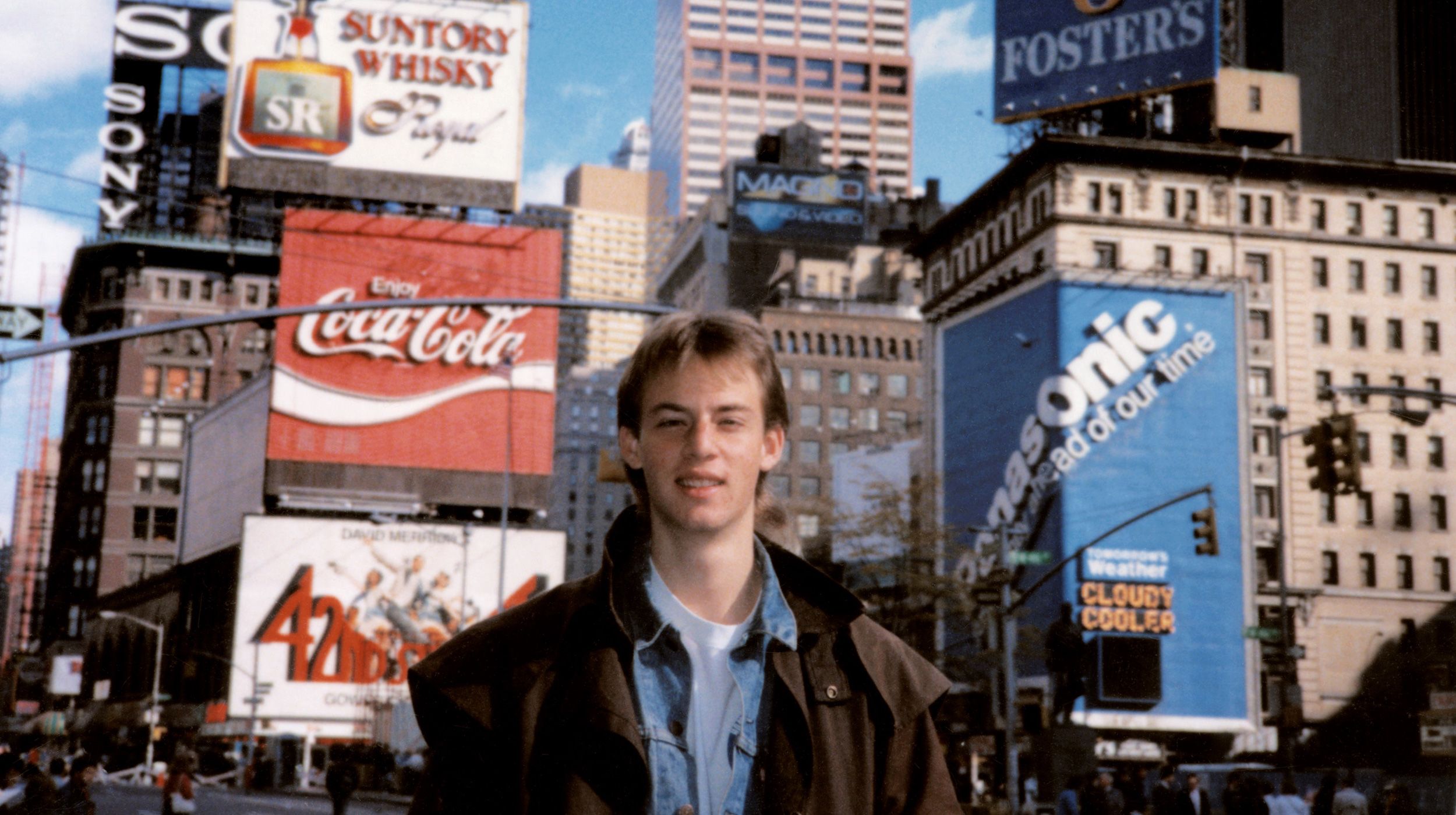
(CNN) — When David English woke up on the morning of September 11, 2001, he was confident his life was about to change.
The entrepreneur, who was working near the Lower Manhattan area now known as Ground Zero, had been scheduled to sign a “career-clinching contract” with a major bank that day — something he believed would set him on the path he was destined for.
But life had other plans. “That day obviously just completely changed my life and put me on a different path,” English tells CNN Travel.
It wasn’t solely the scale of the tragedy he witnessed first-hand. English describes watching fighter jets fly over his New York apartment, followed by weeks of constant “false alarms and alerts,” and breathing in “toxic smoke” that drifted from the site.
Over a year after the terror attacks, he quit his life in the US and moved to Argentina, where he’s lived ever since.
English, who grew up in Nashville, Tennessee, was desperate to escape what he felt was a “horrible climate of fear” that had “instilled itself in the US” after 9/11.
Life-changing event
“Argentina was my lifeline, so I kind of grabbed it with all my might and just left everything behind and decided to completely start over,” he says.
English had fallen in love with Argentina’s culture during a 1998 visit and had good memories of people greeting each other “with a hug and kiss” wherever he went.
“I think that after surviving a terrorist attack, that’s something I really needed,” he says, recalling how his beloved friend had repeatedly encouraged him to take another trip to Argentina.
English returned there later that year and eventually decided to pack up his life in New York and move to Mendoza, a city he viewed as an “undiscovered gem” thanks to its wineries, mountains, “wonderful weather” and “nice people.”
He secured some financial support from the American Red Cross and a September 11 victim compensation fund, which he combined with his savings to cover the move.
Being surrounded by such “natural beauty” proved to be healing for English, who found solace in the foothills of the Andes, as well as Mendoza’s plazas and parks, and “anywhere people gathered to have a good time and forget about life’s worries.”
Mendoza, located in the heart of Argentina’s wine country, was booming with entrepreneurs at the time. Many had arrived following the nation’s severe 2001 economic recession, and English could sense the city was filled with opportunity.
Starting over
He felt that he could “make a name” for himself in Mendoza and potentially become “a big fish in a small pond” — an opportunity he felt was out of reach back home. English went on to start a consulting firm to assist foreign investors, and later co-found a boutique organization that creates custom study-abroad programs for US universities.
Although he was able to make business connections relatively quickly, English admits that truly settling into the Spanish-speaking country took time.
“I think anybody who says it’s faster than that is lying,” he says. “To truly adapt to a foreign culture and really be a part of it, it takes many years…
“It is not easy. And it takes a lot of work and sacrifice, blood, sweat and tears, and real motivation.”
English stresses that those who settle here have to “truly love the place and its people,” to “break through all those barriers.” And perhaps most importantly: “speak the language.”
Thankfully, English had studied Spanish prior to relocating and later completed a “grueling” MBA taught entirely in the language, which proved crucial to his success.
No-frills lifestyle
In 2010, English and this then-partner, who is Argentine, welcomed their son, Benjamin. Having a child born in Argentina was something he could never have envisioned a decade earlier. English was thrilled that his son “would be growing up in one of the world’s last frontiers amongst a people who prioritize relationships” over money.
“In the United States, time is money,” he adds, noting how unusual it is to see businesses closed on weekends back home. “In Argentina, time is relationships. That’s reflected in everything here in Mendoza and most of the country.”
English remains bemused by the US obsession with “getting things delivered by Amazon on Sundays,” calling the concept “just inconceivable here.”
He’s also a devoted fan of Argentina’s “no-frills lifestyle.”
“It is not picture perfect,” he says. “It’s rough around the edges. Nothing is pristine and freshly painted, and that’s fine by me.”
He particularly appreciates Mendoza’s walkability, joking that “the butcher, the baker, the candlestick maker are all within two blocks” of his house in La Sexta Sección neighborhood and he’s on first name terms with all the local shopkeepers.
However, he admits he still hasn’t fully adopted the local, relaxed concept of time, noting he’s usually the only one to “show up on time to birthday parties.”
Having witnessed Argentina go through many changes over the past quarter-century, English observes that while it isn’t as affordable as it once was, healthcare, education and public transportation remain vastly cheaper than in US.
One of the hardest adjustments, he admits, has been navigating business with people who aren’t always “sincere,” or “entirely transparent in their motives.”
“Some Argentines operate by a different code than we have in the States,” he adds.
In 2019, English returned to New York for the first time in nearly two decades, bringing his son along with him. He produced a short film, “My Father’s Lessons,” about the emotional trip.
The visit confirmed that his decision to stay abroad was the right one.
“I lead a less stressful, less fearful, less anxious life, where I can do what I want to do on my own terms,” says English, who also authored the 2013 book, “Expat Entrepreneurs in Argentina.”
“And I can make a mark for myself.”
Full circle moment
In a surprising turn of events, his son — now 16 — enrolled in a New York boarding school and is currently living in the city.
“Ironically, my son would not exist if it weren’t for 9/11,” he says. “And when I try to think of the positive aspects of 9/11 in my life, I was very fortunate in that I could turn that tragedy into a triumph.”
Reflecting on his decision to leave, English says he’s grateful for the chance to “start over” in Argentina, become a father and live the “life of adventure” he had always dreamed of.
“That wouldn’t have happened if 9/11 hadn’t happened,” he adds. “I’d probably still be in New York, and that would have been my tragedy.”
English’s brother, who was also living and working in New York in 2001, remained in the city and is now a successful CEO.
“He stayed on the path for the American Dream. Now I say I live the ‘Argentinean dream,’” he says, adding that he has fully embraced the culture, “eating a lot of meat, dancing a lot, and drinking a lot of mate teas.”
Recently, English’s son sent him a photo of himself standing by his father’s late friend’s name, inscribed at the National September 11 Memorial and Museum in Ground Zero — an emotional “full-circle moment” for him.
“Something can be born out of tragedy… The seed of something completely new, different and positive can be inside,” he says.
“We can survive. We can improve and we can go on, if we’re lucky.”
The-CNN-Wire
™ & © 2026 Cable News Network, Inc., a Warner Bros. Discovery Company. All rights reserved.
