
The home design shift bringing natural light and energy performance together


Artificial lighting was a major step forward for productivity and safety, but it still doesn’t compare to natural light. As human beings, we’re deeply connected with the natural cycle of light. It impacts our mood, productivity, sleep, and overall well-being.
We crave spaces filled with natural light, which is why naturally lit homes feel cozier and more welcoming. Today, we also know natural light can improve a house’s energy efficiency, which is why more buyers want home layouts and design tweaks that make full use of this free, renewable resource, reports Florida-based Reece Windows & Doors.
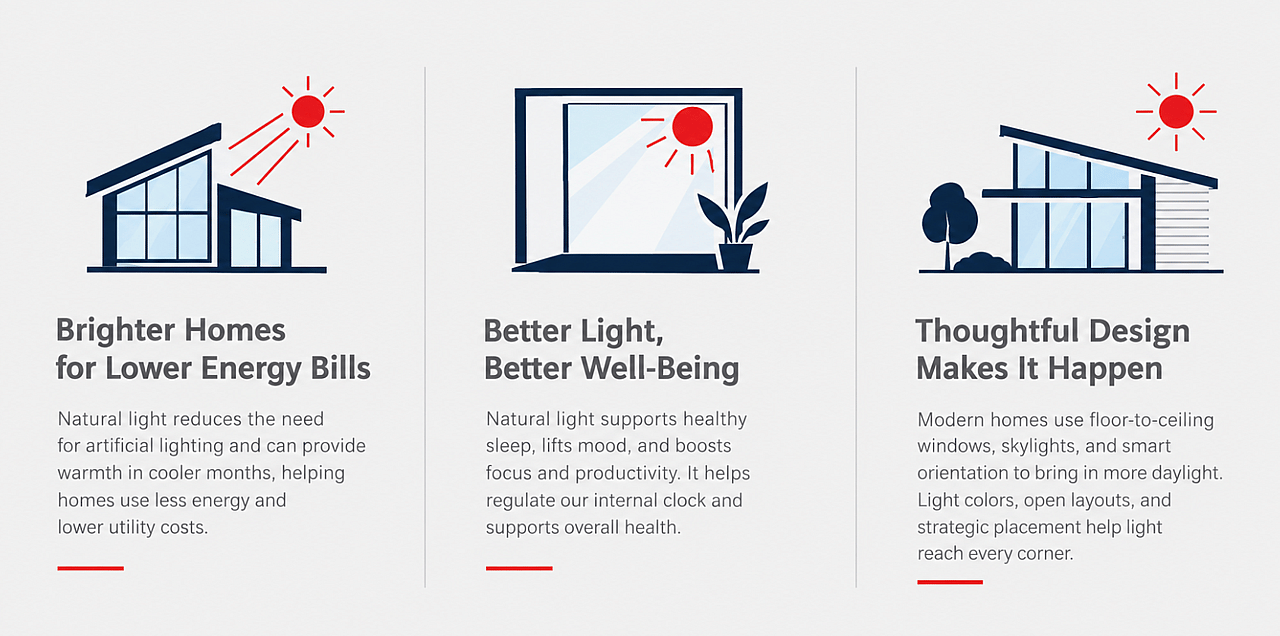
When homes are designed to maximize natural light, energy consumption drops.
First, when sunlight is free to come inside, there’s no need for artificial lighting (during the day, at least). Artificial lights account for 5%–10% of a typical household’s energy use. Sunlight, on the other hand, is free. Making greater use of daylight can therefore help households trim their energy bills by a few percentage points.
Second, sunlight carries solar radiation that converts to thermal energy when it hits interior materials like concrete, tile, or drywall. This comes in handy during winter, when sunlight is at a lower angle. South-facing homes with a passive solar design can capture the rays and their warmth and keep everyone inside toasty and comfortable.
What about summer? How should homes handle sunlight during scorching hot weather, when temperatures rise to 100F? This is where modern low-emissivity (low-E) glass and energy-efficient window treatments come in.The right window designs can prevent overheating while still enjoying the benefits of natural light.
Why We Prefer Natural Light
As humans, we evolved under the sun’s dynamic cycle, and numerous studies show that natural light deeply affects circadian rhythms, mental health, and cellular function. So, it’s not just about having energy-efficient homes; it’s also about our overall well-being in day-to-day life.
Natural light affects work performance by suppressing melatonin and boosting alertness and executive function. Those who work in naturally lit environments report lower rates of depressive symptoms and burnout.
Daily exposure to sunlight, especially in the early hours of the day, is also beneficial for our physical and mental health. It improves sleep quality, reduces eye strain, boosts cognitive function, and helps strengthen bones. For mental health, natural light is a powerful mood regulator; without it, residents may suffer from Seasonal Affective Disorder (SAD) and general daytime lethargy.
A home that welcomes plenty of natural light becomes a much better space for well-being, especially when it doubles as a workplace.
How Modern Homes Let Natural Light In
One defining feature of modern home designs is floor-to-ceiling and corner windows, skylights, and wide sliding glass doors. Beyond opening interiors to the outdoors, these elements flood the home with natural light, creating a sense of openness, airiness, and understated luxury.
Large side windows capture multi-directional light throughout the day while overhead openings (skylights, roof lanterns, or light tubes) complete the puzzle. Light tubes in particular are an ingenious way to channel sunlight into windowless rooms, like corridors and bathrooms.
The orientation of the house and its windows is also important. For instance, in the Northern Hemisphere, homes should be positioned along an east-west axis, with main living areas and expansive glazing facing south, maximizing natural light. This positioning maximizes low-angle winter sun exposure while overhangs shade high summer sun.
Inside, light-colored walls and mirrors reflect sunlight and redirect it toward the darker areas of the house. Homes with open layouts are the most energy efficient, since the light travels through the space unhindered by walls and other obstacles.
Turning Natural Light into Energy and Health
When it comes to our homes, sunlight makes everything better. It lowers energy bills, improves comfort, and makes the space feel welcoming and open. It can transform the character of a room, highlighting textures, materials, and architectural details in ways artificial light simply cannot.
Natural light exposure also promotes health, mood regulation, and sleep quality. Daylight has become an essential part of creating homes that support how we live and feel.
This story was produced by Reece Windows & Doors and reviewed and distributed by Stacker.
