
Judge to rule Wednesday on DOJ bid to set aside 20,000 ballots
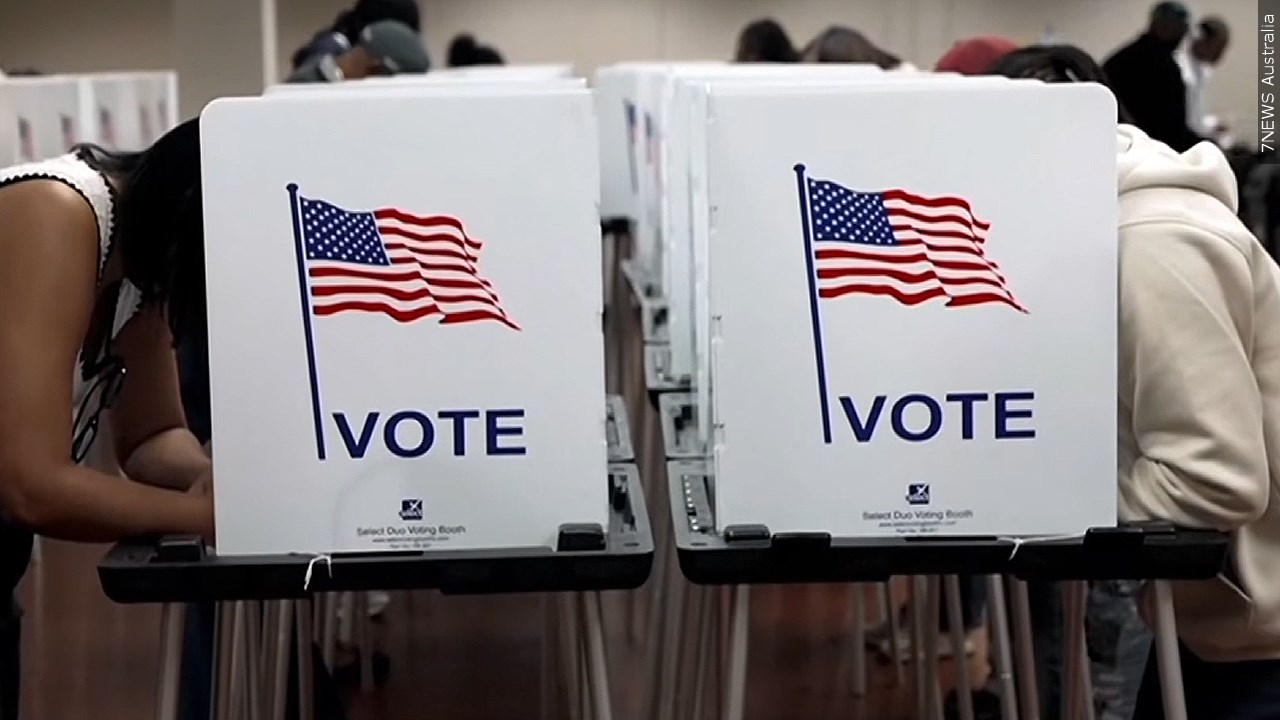

LOS ANGELES (KESQ) - With election day one week away, a Los Angeles federal judge said today he would rule by Wednesday on the Trump administration's emergency request to direct California election officials to set aside thousands of mail ballots cast by voters the government suspects are non-citizens, and indicated he would set a further hearing in the next two weeks.
U.S. District Judge David O. Carter heard arguments from the Department of Justice and California officials on the bid to sequester ballots of about 20,000 people federal prosecutors believe were unlawfully registered to vote, but he appeared unlikely to grant the request.
"You've got a remedy for goodness sake,'' Carter told federal officials. "Go out and indict.''
The judge said election officials had until Dec. 3 -- the date by which election results must be certified -- to resolve the issue, suggesting there was no immediate need for a last-minute temporary restraining order.
Bill Essayli, the top federal prosecutor in the Los Angeles area, argued for the government at Tuesday's hearing but did not immediately respond to the judge's comments.
The three-hour-plus hearing in Los Angeles federal court began with an opening statement from Essayli, who insisted the government had "found credible evidence of persons we suspect are non citizens'' registered to vote by mail. He claimed Secretary of State Shirley Weber and Los Angeles County Registrar-Recorder/County Clerk Dean Logan had allowed ``co-mingling'' of lawful and unlawful ballots, and pointed to methods prosecutors used to prove his suspicions.
However, Michael Cohen, an attorney for the state, told the judge that Essayli's office relied upon ``data and methods known to be unreliable.''
At the conclusion of the hearing, Carter appeared to offer a warning to federal prosecutors.
``This court believes it would be wise -- that it would be wise -- that any threats to state and county elected employees cease immediately,'' he said, referring to a series of statements from Essayli threatening elections officials with criminal penalties if they continue counting suspected unlawful ballots.
A federal appeals court panel on Monday refused to consider the administration's emergency appeal of the matter until Carter rules. In a 2-1 decision, a three-judge panel of the 9th U.S. Circuit Court of Appeals sent the case back to Carter, who initially had indicated he would rule ``promptly'' after the Tuesday hearing in downtown Los Angeles.
At a rare Sunday session, the appeals panel indicated it saw serious problems with the administration's request for immediate action to separate ballots submitted by voters on a list of about 20,000 suspected non-citizens.
``It seems to me you want us to issue an injunction that is entirely inconsistent with the law the California Legislature has adopted,'' Judge Mark Bennett, a Trump appointee, said at the hearing. ``How can we do that?''
``Congress and the California Legislature have said non-citizens can't vote. This lawsuit is about, `We don't like the way you're sorting citizens from non-citizens.' I just don't see (federal law) telling California how to do the sorting,'' he said.
Gov. Gavin Newsom applauded the appellate ruling.
"Today's ruling is a positive development and a welcome speed bump to Trump's disgusting attacks on the Constitution and our country's democracy,'' Newsom said in a statement Monday. He urged Californians to participate in the election and said, ``California is fighting back. And we are calling on all Californians to do the same."
Attorney General Rob Bonta said the president had overstepped his authority by ordering the state to purge its voter rolls.
"The U.S. Constitution gives states and Congress -- not the President or the Executive Branch -- the power to determine the time, place, and manner of elections,'' Bonta said in a statement. ``The court's order serves as an important step in our efforts to protect Californians' right to vote and our state's authority to run fair and secure elections.''
The Justice Department had appealed the case before Carter ruled, arguing that his failure to meet a requested deadline amounted to a "constructive denial'' of its request for preliminary relief. All three appellate judges expressed concern that the department had appealed before Carter had ruled.
The closely watched lawsuit, United States of America v. State of California, et al., is assigned to the same judge who previously dismissed a Justice Department bid to force California to turn over its full voter registration list to the federal government.
The Justice Department has sued 30 states that refused to turn over voter data, losing the majority of the cases so far.
In opposition to the department's request, Weber and Logan argued they lack the mechanisms and legal authority to freeze mail ballots until voters' citizenship can be verified.
Alleged evidence that tens of thousands of people in Los Angeles County are unlawfully registered to vote is ``unreliable,'' according to the county's opposition to the request.
"Voting is already underway in Los Angeles County,'' the motion states. ``Ballots have been mailed, returned and processed, and election officials are working toward fixed deadlines for counting and certification. Plaintiff United States of America, through the Department of Justice ... now asks this court to interrupt that work and enjoin the withholding of 20,000 registered California voters' ballots pending investigation based solely on an unreliable voter roll maintenance list.''
Weber's office said federal officials claimed in July that California had 190,000 non-citizens on its voter rolls. When her office asked for evidence, "They refused and provided California with nothing.''
The Trump administration has long alleged that large numbers of non-citizens were casting ballots in California and elsewhere, but officials have not provided proof or documentation of widespread fraud.
