
Why year-round Daylight Saving Time could make school mornings deadly for kids
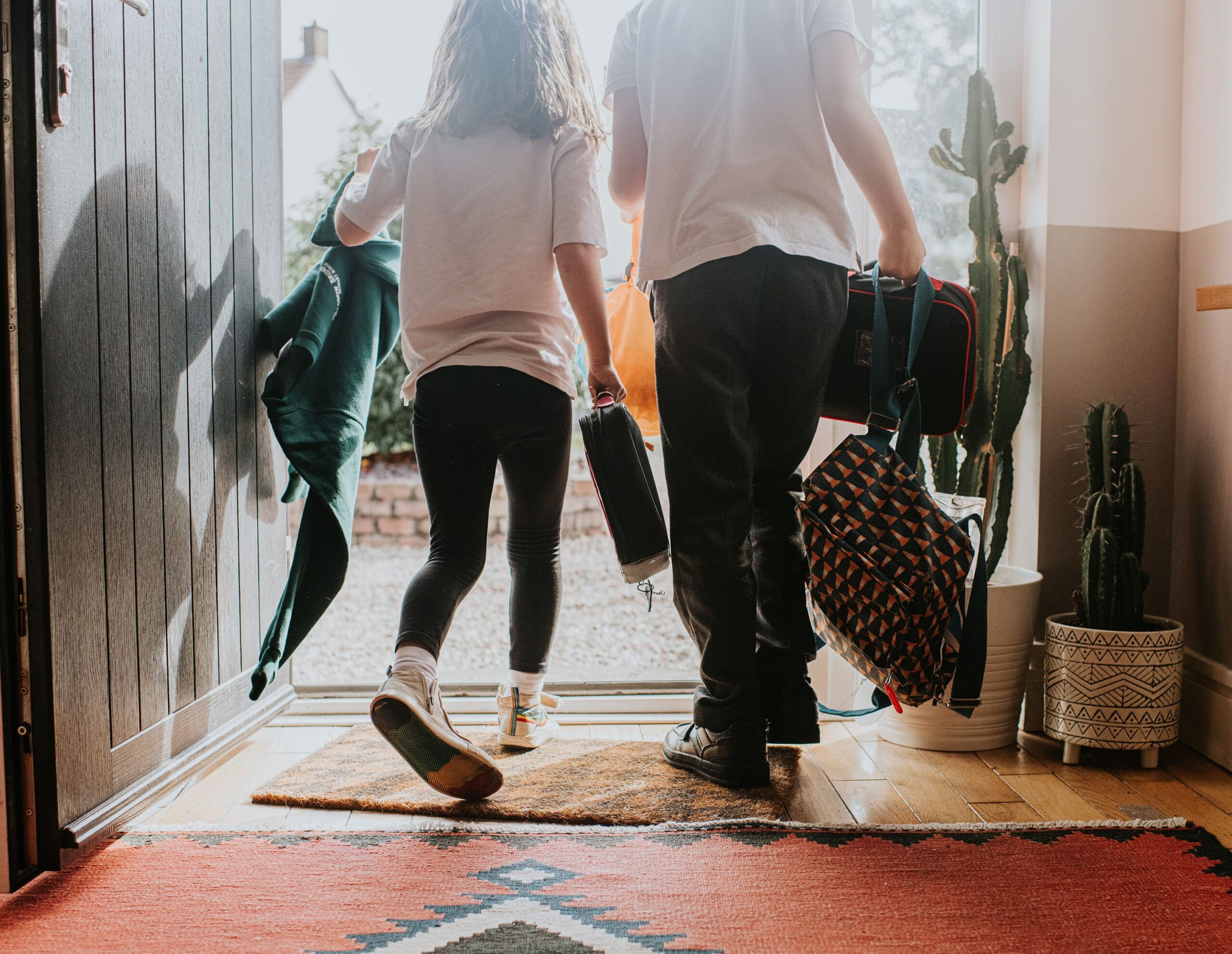
Children heading off to school may be exposed to greater risk in the early morning when it's dark.

By Faye Chiu, CNN
(CNN) — Ready for the time change? Daylight Saving Time ends this Sunday, when most Americans will turn their clocks back an hour.
Many people would prefer to stop changing clocks altogether; there is even legislation to make Daylight Saving Time permanent. But doing so could have serious consequences for children’s safety, a new study suggests.
The research, published Thursday in the scientific journal Current Biology, examines how permanent Daylight Saving Time could affect children traveling to school. Scientists from the University of Washington examined school start times at more than 16,000 schools across 14 states, representing approximately 8.6 million children.
To help understand the findings and how families should navigate the upcoming time change, I spoke with CNN wellness expert Dr. Leana Wen. Wen is an emergency physician and clinical associate professor at George Washington University. She previously was Baltimore’s health commissioner and is the mother of two young children.
CNN: Can you explain what happens when Daylight Saving Time ends on November 1? Why do we change clocks twice a year?
Dr. Leana Wen: At 2 a.m. on Sunday, clocks will “fall back,” or move back one hour to 1 a.m. This means sunrise and sunset will occur an hour earlier, according to our clocks. Practically, the result is that people will have more daylight in the morning, but it will get dark earlier in the evening.
Daylight Saving Time was adopted to shift more daylight into the evening during the warmer months. In the United States, the observance currently begins on the second Sunday in March and ends on the first Sunday in November.
The twice-yearly clock changes are controversial because they disrupt people’s sleep schedules and daily routines. The spring transition is particularly difficult because people lose an hour of sleep. The fall transition gives us an extra hour, but it can still disrupt sleep, especially for young children who have established bedtime and wake-up routines.
CNN: There have been proposals to make Daylight Saving Time permanent. Why do some people support this change?
Wen: The main argument is that people would no longer have to change their clocks twice a year. Supporters also favor having more daylight in the evening throughout the year. As a result, people who finish work or school in the late afternoon would have more daylight for outdoor exercise and recreational activities. Additional evening daylight could benefit some businesses and perhaps reduce some traffic accidents.
The Sunshine Protection Act, which the US House of Representatives passed in July, proposes making Daylight Saving Time permanent nationwide. If enacted, Americans would keep their clocks on Daylight Saving Time throughout the winter. This would mean an extra hour of daylight in the evening, but sunrise would also occur an hour later during the winter months.
Not everyone supports this change. Some who advocate for ending clock changes prefer permanent standard time, which would keep the clocks on winter time year-round and stop the switch to Daylight Saving Time.
CNN: What did this new study find about the potential risks to children traveling to school?
Wen: The team calculated how many school mornings children would have to leave home before sunrise under three scenarios: permanent standard time, the current system of changing clocks twice a year, and permanent Daylight Saving Time.
The study authors estimated that permanent Daylight Saving Time would result in approximately 356 million additional school commutes before sunrise each year in those 14 states, compared with the current system. When researchers extended their analysis nationwide, they estimated more than 2 billion additional dark-morning school commutes annually.
The researchers then examined whether traveling in darkness could pose additional safety risks. The team analyzed nationwide fatal motor vehicle crashes from 2015 through 2024, focusing on more than 10,000 fatal crashes occurring on school-year mornings between 7 and 8:30 a.m.
The scientists found that crashes before sunrise had 77% higher odds of involving a pedestrian compared with crashes after sunrise. When they focused specifically on children ages 5 to 18, the odds of pedestrian involvement were more than twice as high during dark mornings, suggesting that schoolchildren could face greater risks if Daylight Saving Time became permanent.
The United States briefly adopted permanent Daylight Saving Time during the energy crisis in 1974 but reversed course within months, in part because of concerns about children traveling to school in the dark.
CNN: Why are children particularly vulnerable to traffic accidents during dark mornings?
Wen: Visibility is a major factor. Drivers have more difficulty seeing pedestrians in the dark, especially children who tend to be smaller and less visible. Children crossing streets to walk to school or the bus stop may be exposed to greater risk.
Younger children are also still developing the ability to judge vehicle speed and distance. They may be less predictable when crossing streets. Teenagers who drive to school also face risks associated with limited driving experience.
Despite the significance of the findings, policymakers should consider that this study was not an experiment in which researchers changed clock policies and measured subsequent crashes. Instead, they used existing school schedules, sunrise calculations and historical crash records to estimate potential effects. Also, the nationwide estimate relied on an assumed school start time of 8 a.m., which is not the case everywhere. In fact, many schools start later.
I think the findings still identify a plausible safety concern. Also, as the researchers pointed out, children from lower-income families could be disproportionately affected because some must travel early to participate in school breakfast programs and are more likely to rely on walking and public transportation.
CNN: What are the arguments for and against making Daylight Saving Time permanent? Is permanent standard time a better alternative?
Permanent Daylight Saving Time would provide more evening daylight, which many people value. Some research has also suggested that it could reduce vehicle collisions with deer. On the other hand, permanent standard time would preserve more daylight in the morning, when children and commuters are traveling to school and work.
Several medical organizations, including sleep medicine specialists, favor permanent standard time because it better aligns our schedules with our natural biological clocks, known as circadian rhythms. These internal clocks regulate sleep, alertness and other physiological functions. Morning sunlight helps synchronize them and signals to the brain that it is time to be awake.
None of these proposals, of course, would actually “protect sunlight” and add more daylight to the day. The question for policymakers is when that daylight would occur and how best to balance the benefits of morning versus evening light.
CNN: In the meantime, we’re still changing clocks soon. How can parents and guardians prepare their children — and themselves — in the days leading up to the time change?
Wen: For people with younger children or who themselves have had trouble with time changes in the past, I recommend making small adjustments several days before the transition.
Because clocks are moving backward, a child who normally goes to bed at 8 p.m. will feel ready for bed at 7 p.m. after the change. Parents can gradually shift bedtime later by about 15 minutes every day for four days before November 1. Moving meals, bath time and other evening routines later can help reinforce the adjustment.
Try to maintain consistent wake-up times, and expose children right away to natural light in the morning. Outdoor activity in the morning and throughout the day also supports healthy sleep. In the evening, keep a predictable wind-down routine and try not to offer screens before bedtime.
Adults can use similar strategies. Some people may feel sleepy earlier in the evening or wake up earlier than intended. Others may experience an afternoon slump because it gets dark earlier. I would recommend taking a walk outdoors during daylight hours, exercising regularly and avoiding caffeine late in the day.
Families should also prepare for the earlier sunsets. Children who walk or bike home from school or participate in afternoon activities may find themselves traveling in darkness sooner than before. Kids should wear reflective clothing, use lights on bicycles, use marked crossings, and ideally travel with an adult or a group of friends to improve visibility and safety.
The-CNN-Wire
™ & © 2026 Cable News Network, Inc., a Warner Bros. Discovery Company. All rights reserved.
