
Supreme Court rejects Trump’s attempt to segregate ballots in California

By John Fritze and Tierney Sneed, CNN
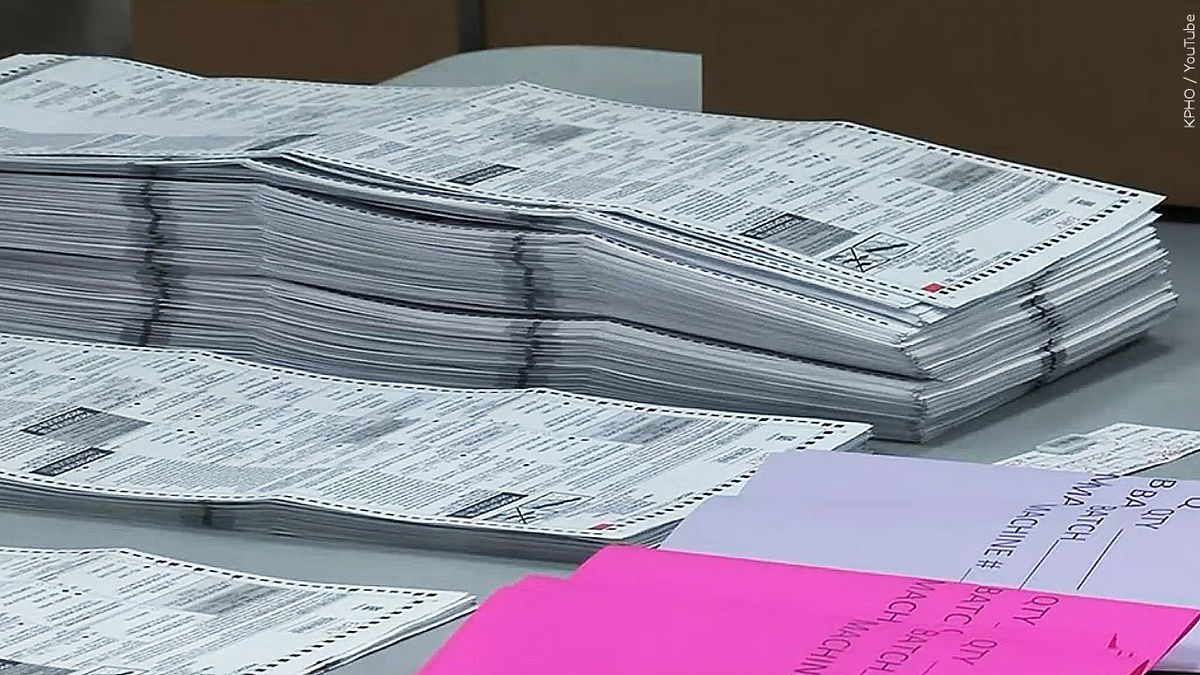
(CNN) — The Supreme Court on Monday quickly shut down President Donald Trump’s effort to force California to sideline potentially thousands of ballots that the Justice Department claims may have been cast by noncitizens, rejecting the administration’s emergency request hours after it was filed.
The unusually fast decision underscored that the administration’s case, which was based on an uncertain methodology, was a reach that has been rejected by every court to consider it. The appeal also came to the high court on an exceedingly tight timeline — on the eve of the midterm election — with an unknown number of mail ballots in question likely already counted.
The court did not explain its reasoning and instead handed down only a one-sentence order. There were no noted dissents.
Tens of millions of voters have already cast early ballots nationwide.
“This office has been informed that the United States has identified more than 20,000 individuals who appear to be registered to vote in California based on publicly available information at the time that information was received, but who, in the United States’ view, are likely not U.S. citizens,” US Solicitor General D. John Sauer told the court earlier Monday.
In another sign that the Supreme Court didn’t take the appeal especially seriously, the justices did not ask to see a response brief from California or other parties before ruling – as is their usual practice in high-profile cases.
The rapid decision marked another major loss for Trump on election cases at the high court. In September, the justices rejected the president’s controversial plan to change how mail ballots are sent to voters across the country, rebuffing a proposal that election officials warned would have had catastrophic consequences if allowed to take effect for this year’s midterms.
Sauer, the Trump administration’s top appellate attorney, urged the court to grant the “modest remedy” of setting aside any ballots cast by those individuals until the allegations could be resolved.
DOJ had argued the federal government had a constitutional interest in ensuring that only citizens vote. It also claims that California’s failure to investigate the registered voters the administration has flagged is frustrating enforcement of the federal criminal law banning noncitizen voting.
California and voting rights groups countered that the federal government’s past claims of noncitizen voters have not withstood scrutiny, that the current claims are based on fuzzy evidence that risks disenfranchising citizens and that the Trump administration doesn’t have authority to tell state officials how to handle the issue. Those are arguments that found purchase in lower federal courts that ruled against Trump.
“Every court to hear this case has now rejected the DOJ’s attempt to cast a cloud of suspicion over eligible voters’ ballots on the eve of an election,” said Uzoma Nkwonta, with the Elias Law Group, which represented groups opposed to the Trump administration suit.
On Friday, the 9th US Circuit Court of Appeals barred the administration from intervening in California’s mail-in ballot counting, concluding that the federal government has no power to dictate to states how to run elections.
“If the United States believes different procedures are necessary for vote-by-mail ballots, we believe it should take that suggestion to Congress, not the courts,” the appeals court wrote in a 2-1 decision that was issued by US Circuit Judges Mark Bennett, a Trump nominee, and Gabriel Sanchez, who was named to the bench by former President Joe Biden.
“The district court found that the risks that noncitizens are voting are, at best, uncertain, and also tempered by California’s established voter-eligibility procedures,” the 9th Circuit wrote Friday. “In contrast, there is a material risk that granting the United States its requested relief would result in disenfranchisement.”
In his dissent, US Circuit Judge Patrick Bumatay noted that the Trump administration was asking only to halt the mixing of ballots cast by citizens and alleged noncitizens. Once those ballots are processed, all sides agree, it would be impossible to separate them.
“Throughout history, federal courts have acted to protect the voting and civil rights of our citizens by enjoining state action that violates the law,” wrote Bumatay, a Trump nominee. “And common sense also tells us that the federal government shouldn’t have to sit on its hands while a state allows the violation of federal law, especially when the integrity of federal elections is at stake.”
The appeals court also raised an issue that could be decisive for the Supreme Court. Under a legal theory known as the “Purcell principle,” the justices have long warned against federal courts weighing in at the last minute to change the rules of an election.
Trump has had a mixed record with emergency election appeals at the Supreme Court. Most notably, the justices in September rejected the president’s attempt to give the US Postal Service extraordinary power to withhold certain mail ballots. But the court sided with the Department of Homeland Security days later, allowing it to continue providing controversial citizenship data to state election officials.
“The federal government continues to press the same arguments, despite repeatedly coming up short,” said Jon Miller, chief program officer at Public Rights Project, which is part of the legal team fighting the Justice Department. “This case has bounced between the appellate and district courts – and every time, the courts have found the Justice Department wasn’t entitled to the relief it was seeking.”
This story has been updated with additional details.
The-CNN-Wire
™ & © 2026 Cable News Network, Inc., a Warner Bros. Discovery Company. All rights reserved.