How to recruit and lead staff who truly know your community

Courtesy of Providence Foundation
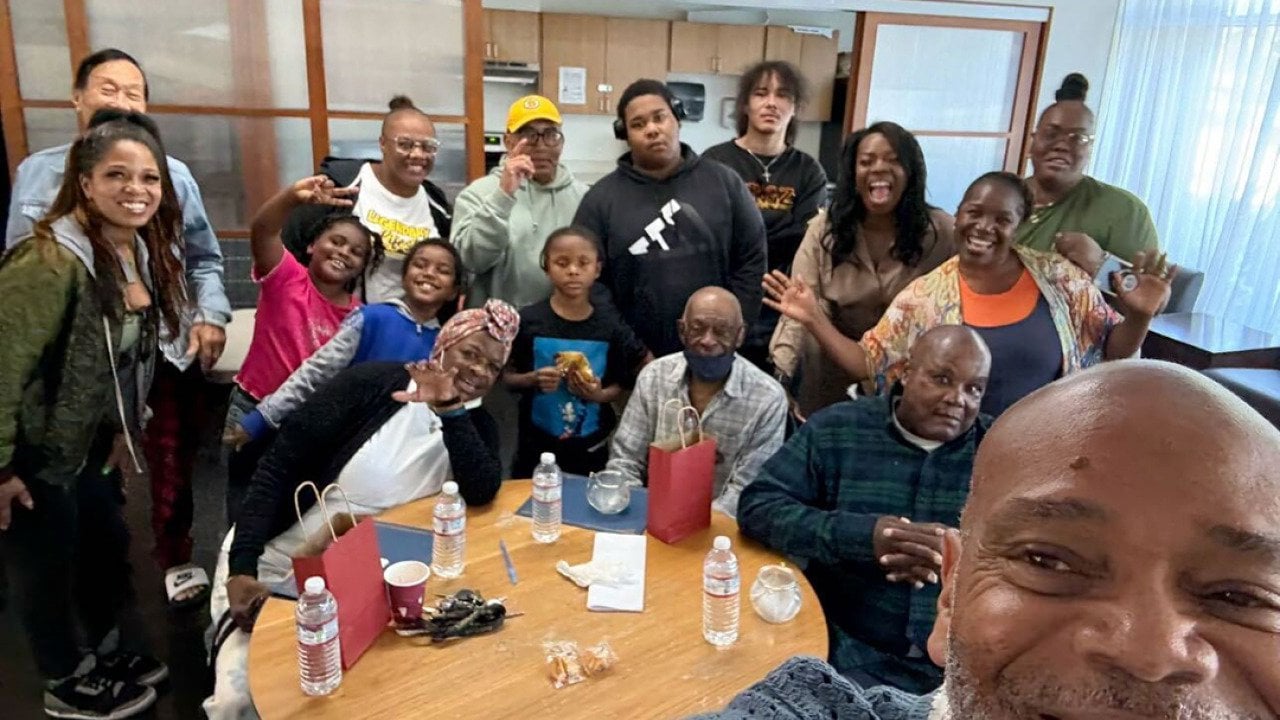
Dexter Hall, interim executive director of the Providence Foundation of San Francisco, often sits in meetings listening to data on the poverty, housing issues, and economic disparities that the organization takes on daily. “I don’t have to imagine who those numbers represent,” Hall tells The Economic Hardship Reporting Project and The Chronicle of Philanthropy. “I think: I am data. Every statistic someone reads off a slide is someone I’ve known.”
Born in East Waco, Texas, and raised in East Oakland, Hall grew up with his siblings surrounded by homelessness and financial instability. “My current knowledge of economic data now tells me what I didn’t know then: We were poor. We lived below the poverty line. But because of my mother’s love and the strength of our community, it never felt that way. We helped each other with what we had. We didn’t have much, but we had each other.”
Hall’s mother — whom he reverently refers to as “Mrs. Mildred Y. Hall” — worked as a certified nurse assistant. She later went back to school and became a dietary supervisor at a convalescent home. At home, she seemed to work miracles with what little the family had, he says. “I watched her stretch money for two weeks just to make sure she had bus fare to get to work. … She gave everything she had to make sure we had what we needed.”
The family typically lived in tight quarters but didn’t hesitate to give anyone in need a bed or the couch. “We made space where there was none,” Hall says.
These experiences constantly flash through Hall’s mind at Providence, particularly when conversations focus on those navigating homelessness or facing food insecurity. Often, these conversations can be abstract and lack understanding of what it means to live on the edge of society. Hall adds a needed reality check.
“I bring that lived knowledge to every decision,” he says, “because this work isn’t theoretical — it’s personal.”
Partners and Architects
Hall is an evangelist for the idea that organizations serving the vulnerable — such as those living in poverty, struggling to find housing, managing addiction, or experiencing domestic violence — should hire people with lived experience.
“People aren’t problems to be solved — they’re partners in their own transformation,” he says. “When leaders reflect the communities they serve, they listen differently, design differently, and deliver differently. They know how to ask without judgment, support without pity, and challenge with love. People with lived experience aren’t at the margins of this work — they are its architects.”
Team members with lived experience also are more likely to establish trust with clients. “As an immigrant, I deeply understand how overwhelming it can feel to start over in a big city like New York,” says Marlyn Navarro, a program coordinator at Bottomless Closet who immigrated to the United States from Caracas, Venezuela, after her husband was almost murdered during a robbery.
Navarro had been a professional in Venezuela and remembers feeling lost and unsure of how to rebuild a career. Many arrive feeling nervous and anxious, and they often struggle with English, she says. “I love being able to greet them with warmth and compassion, sharing with them that I’ve been in their shoes, and that it’s OK to feel uncertain. Just showing them they’re not alone can make a big difference.”
Hall and others stress that people who have lived experience can excel at all levels of organizations — as lobbyists, fundraisers, board members, C-suite leaders. In Florida, Teach For America’s lobbyist is a TFA alum and former principal who can offer a valuable perspective about how policy affects schools and students.
“Including people with lived experience in decision-making is essential because their insights bring meaningful context that others may overlook,” LaKeisha Wells-Palmer, executive director of Teach For America regions in Florida, said via email. “When legislators ask, ‘Who are you, and what do you really do?’ it’s these lived experiences that cut through the noise and provide compelling, real-world context and help paint a realistic — not textbook — picture of the challenges our school leaders, educators, and students are dealing with today.”
Standing With Clients
Patti D’Agostino first came to Hope’s Door, a domestic-violence prevention and support organization, as a client. After 30 years of marriage and abuse, she didn’t have an income or career. “I credit Hope’s Door for getting me through the challenges and the life-changing experience,” D’Agostino says.
D’Agostino now works as the organization’s chief of development and community relations. She manages communications, fundraising initiatives, and prevention education, as well as outreach to spread awareness of the challenges faced by domestic violence survivors.
While D’Agostino believes her firsthand perspective is key to driving change, sharing it can be retraumatizing for her. Fortunately, she has cultivated a network of support, but she knows that clients don’t have that ready-made assistance.
“I ensure that the client owns their story,” D’Agostino says. “It is their choice to share or not, and it is our responsibility to support and encourage their choices. The impact of our work is not shown by standing on the shoulders of our clients but rather by standing side by side.”
Lessons From the Experts
While many nonprofits aspire to hire people with lived experience, it’s not easy to manage them well. Class bias is commonplace in nonprofits, says Albert Townsend of the National Alliance to End Homelessness. Some organizations simply don’t invest resources and energy into onboarding and developing team members. “Their value isn’t measured the same” as other staff, he adds.
Townsend is the director of lived experience and innovation at the organization, which has prioritized hiring and integrating people who have experienced homelessness. The alliance has at least four full-time workers who have been homeless at some point in their lives. The same is true of roughly one-third of the group’s consultants.
Townsend’s team helps train and advise alliance members and other organizations and partners on how to recruit, incorporate, and support team members with lived experience.
We enlisted his help — and consulted his group’s training materials and other experts — to compile tips:
- Create a robust recruiting and onboarding program. The alliance draws job candidates from its network of more than 600 people who can be quickly engaged based on their talent and experience. His team also conducts rigorous onboarding, which starts with a discussion of the organization’s history, mission, and core values. The process includes administrative work that allows for prompt payment for completed work — especially important for people with limited means. “When people are afraid they can’t pay their rent or buy groceries, you don’t want them waiting for two or three months to get paid,” Townsend says.
- Build a personal care plan to ensure staff are treated with dignity and honor. Foster a culture of inclusion and work to accommodate individual needs. Examples: large-print materials for low-vision individuals and a sensory-friendly quiet room for those who may be overstimulated and need to decompress. To maintain an inclusive, safe environment, establish a code of conduct and enforce a zero-tolerance policy for discrimination and abusive behavior.
- Set the organizational culture by your example. Townsend often serves as an advocate for those with lived experience, since he is typically the first to review their background and hear their story. He then emphasizes important aspects of their background in staff introductions. Skepticism tends to disappear as individuals prove themselves.
- Watch for — and immediately address — unfair treatment by colleagues, whether it’s conscious or unconscious.
- Offer flexibility. Let people choose how to be involved, and ensure they feel safe and comfortable. Such careful management improves staff effectiveness, ensures they aren’t exploited, and prevents the worst-case outcome: further trauma for the individual.
- Provide opportunities that play to staff strengths and interests. Someone who is naturally creative could help design marketing materials, while an extrovert could be an excellent organizer.
- Support the development of skills and expertise. Pay particular attention to areas where new staff may have had limited exposure and need hands-on training, such as with software and technology.
- Compensate fairly and provide advancement opportunities. This shows that you value their contributions, time, and effort. Paying less than you would pay others perpetuates the cycle of inequity.
- Prove that you welcome and value their input. Include people with lived experience in decision-making and demonstrate that you’re open to their suggestions. You don’t want to use them in a token way.
- Build trust. People with lived experience are often guarded or skeptical of those who make promises, having been let down previously. Build strong, authentic relationships based on trust, respect, and honest conversations. Incorporate their ideas into policies and plans. Townsend says the Alliance regularly surveys its staff to shape their work. The organization’s strategic plan was developed after an 18-month, multistate series of listening sessions.
- Build a diverse team. As you add people with lived experience to your team, don’t forget the importance of diversity of all kinds. Consider race, ethnicity, sexual identity, disability, and other diversity factors.
Co-published by The Economic Hardship Reporting Project and The Chronicle of Philanthropy.
This story was produced by The Economic Hardship Reporting Project and The Chronicle of Philanthropy, and reviewed and distributed by Stacker.

