
The risks President Trump faces after testing positive for COVID-19
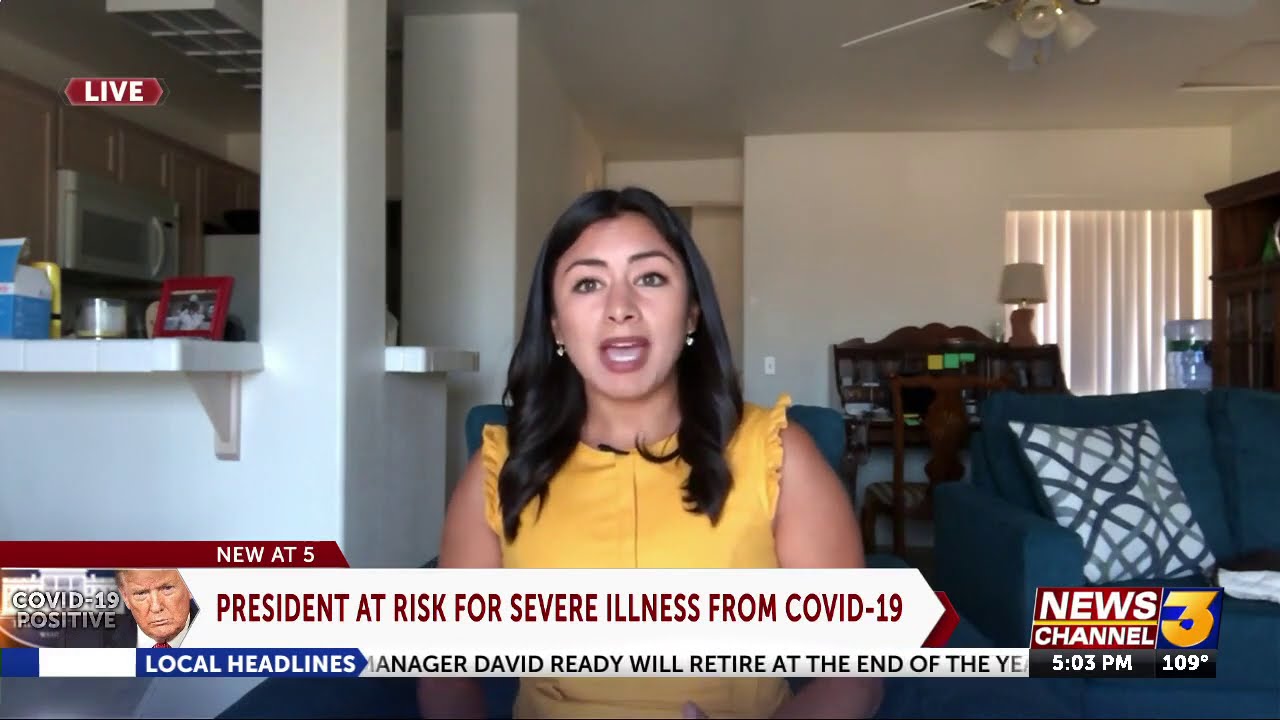



On Friday President Trump touched down at Walter Reed National Military Medical Center in Maryland. That's after he and First Lady Melania Trump tested positive for COVID-19. The president tweeted early Friday morning:
"Tonight @FLOTUS and I have tested positive for COVID-19. We will begin our quarantine and recovery process immediately. We will get through this TOGETHER."
As of Friday afternoon, The White House released a statement saying President Trump "remains fatigued but in good spirits." The statement also indicated that the president received "a single 8 gram dose of Regeneron's polyclonal antibody cocktail."
"I think I’m doing very well, but we’re going to make sure that things work out," President Trump said in a statement.
Many questions have started surrounding the president's health and what risks he could face.
"Any time somebody is in an older age category, they’re at much more risk for serious consequences from it," Eisenhower Health Infection Preventionist, Michael Connors said.
Connors said as people get older, their immune systems tend to weaken.
"Statistically a person in the greater than 65 to 74 age range, that he would fall into, is approximately 5 times more likely to wind up in the hospital when they have COVID, so he is at higher risk for hospitalization and higher risk for mortality. At this point I think that’s something that we’re not overly concerned about," said Connors.
The statistic, by the Centers for Disease Control and Prevention, compared people ages 65-74, which are 5 times more likely to be hospitalized than people ages 18-29.
The death rate compared to the infection rate remains low.
Groups that may also have corbidities, such as diabetes and cancer, can be at greater risk.
In President Trump's most recent physical exam, his weight could also be an issue because it classifies him as 'clinically obese.'
"He’s just a little bit over the limit so between that, and the medical care that he’s receiving, I’m very optimistic that he’ll have a recovery,: Connors said.
The president will spend the next few days at the same hospital he visited back in July, where he made a rare appearance wearing a mask. Throughout the course of COVID-19, he has been skeptical about the effectiveness masks can have in preventing the disease.
'The public health community has always said that masking is what’s indicated. The White House has, I believe, made the stance that because everybody around him is tested is why they weren’t enforcing the masking. The problem with that is even if I get tested today, I may be harboring the virus, and I’m not yet be sick and it won’t yet pick up on the test, but I could still be spreading it," Connors said.
The nation is grappling with more than 205,000 COVID-related deaths. The Centers for Disease Control and Prevention predicts that number to jump between 219,000 and 232,000 deaths by October 24, when the agency plans to release some of its latest numbers.
